Latest News
We will publish a summary of our News stories on this page. For more complete versions of the stories, often with many more photos, please go to our Facebook page. We also publish our stories in our half-termly Newsletters.
News
ALUMNI PROFILE – HANNAH SPEAKMAN
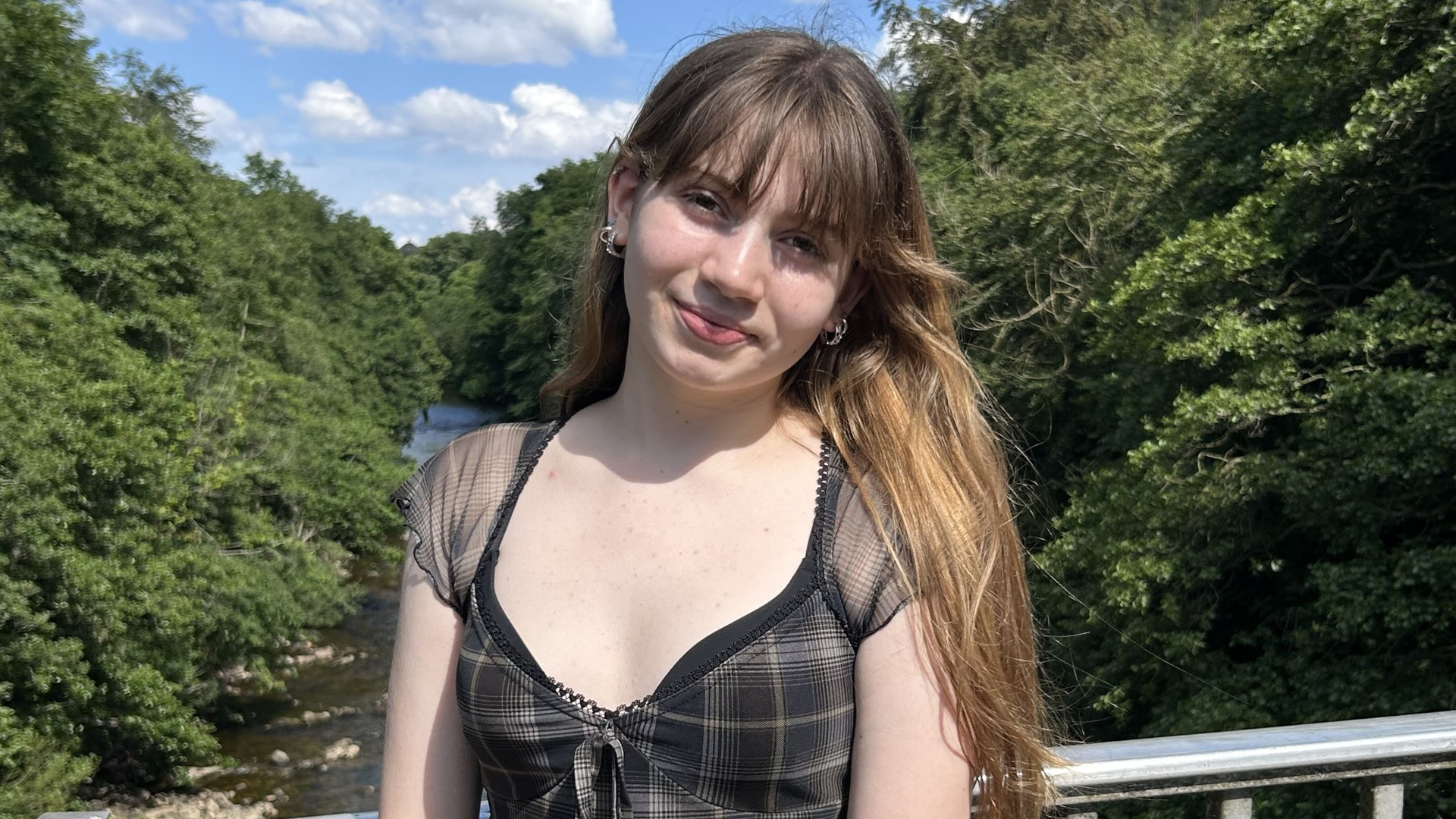
In another of our semi-regular series of alumni profiles, we catch up with Hannah Speakman. Hannah is currently in her fourth year as a Police Constable in the Lancashire Constabulary, a career she had her heart set on since she was in Year 13. In the article, she tells us about the challenges she faced in her early years at Richmond, her swimming and skiing, as well as the journey she has taken through university and extensive training to where she is now. Read on to find out more!
RS: Tell us about your time at and your memories of Richmond School.
HS: I arrived at Richmond School in September 2012 joining 7 Moss. The school had just finished its building work and our tutor room was one of the Art rooms - Mr Moss was an Art teacher and remained my tutor for five years. I didn’t have the best of starts and after a few months at school I became quite seriously ill. I spent some time in hospital and some weeks off school recuperating.
In truth, I found the early years very difficult. As well as being behind with my learning, some students were not very kind to me - it was not easy at times having a dad who was a senior teacher at the school.
I was reasonably good at sports and had been a member of the Richmond and Dales swimming team. I was also a good skier and by coincidence there were several other good skiers at the school and for the first time ever Richmond School started a ski team. We trained every Tuesday evening on a dry slope in Sunderland for several years and travelled the length of the country taking part in dry ski slope competitions.
We went on to represent the school at the British Schools Girls Championships in France for two years in a row and one year we actually won, beating some of the best private schools in the UK! Sport became a passion and my PE teachers at the time, Mrs Southgate and Ms Harrower, were always supportive and an absolute bag of laughs. I also represented the school at swimming galas and rounders.
I was not the best of academics and had to work hard for what I got. After GCSE exams I joined the Sixth Form College where Mr Hedley became my tutor. I studied Double CTEC Sports and Health and Social Care. Mr Hedley had taught me GCSE Geography and was always hugely supportive and just a funny guy who never failed to make me smile.
I really enjoyed Sixth Form and became Deputy Head Girl towards the end of Year 12. Taking on such responsibility was a bit scary, but this experience of leadership set me on the start of my career path. During Year 13 and after many University visits, I decided that a policing career was the one for me. I finished college with a Distinction*, Distinction and a Merit. This was the equivalent to an A*, A and a B at A level, which more importantly got me enough points for the university and the course of my choice.
RS: What did you do after Sixth Form College?
HS: A Professional Policing Degree at Edge Hill University, Liverpool was my next move. My A Level results and college experience meant that I went with a huge amount of confidence and positivity. Halfway through my first year, the COVID pandemic arrived. The University all but shut down and I had to return home. For the rest of the year all lectures and exams were online. These were tough times and my new friendships and social experiences ended abruptly. I was back home but felt driven to keep busy. I volunteered to work at Richmond School packaging COVID test kits for students and staff. I also worked overnight shifts packing shelves at Tesco in Catterick Garrison.
I returned to university for my second year but lived off campus. I became Social Secretary of the Women’s University Rugby team and applied to become a Special Constable for Merseyside Police. I found the application process quite tough, and I didn’t get through first time round. I had to wait three months before being able to reapply and thankfully this time I did get through. I finished my second year at Uni whilst also doing my police training. Part way through my final year I became a Special Constable for Merseyside Police and made my first arrest in spring 2022. As I started my final exams, I was also applying to become a Police Constable. After passing the initial application process for Lancashire and Durham Constabularies and Merseyside Police, I then decided to pursue the next stages with Lancashire.
I graduated in July 2022 with a 2.1 BSc In Professional Policing and started with Lancashire Constabulary a month later.
RS: What did you do next?
HS: I’m now into my fourth year as a Police Constable. Initially I joined the Immediate Response Department which responds to emergency 999 calls and deals with the general community. Shortly after joining this department, I passed a three week ‘Blue Light’ driver training course and my First Responder training course which is additional training allowing me to deal with victims of the most serious sexual offences. I then moved to the Response Investigations Team, interviewing and charging suspects in custody. This was a very different 14 months in which I was awarded Divisional Response Constable of the Year and attended a commendation ceremony at Lancashire Headquarters. After this, I returned to the Response Department with a greater insight into general policing. I then trained to become a Resilience Tutor which involves tutoring new constables in their initial 12-week training phase.
RS: What are you doing now?
HS: Currently I am on a secondment to the Student Development Unit where I manage new recruits during their immersion phase as they become independent constables who are then able to work single crewed, deploying to jobs alone.
RS: Do you have any other interests or roles?
HS: Alongside work I have affiliated with a local cricket club becoming a junior coach to the All Stars. I also help organise and run events at the club. I am also a member of the Lancashire Constabulary netball team. I live a few hours' drive away from Richmond, but I do still find time to catch up and meet with my family.
RS: What are your plans for the future?
In the next few weeks, I have an interview for a permanent position within the Student Development Unit. This will develop my leadership and management skills hopefully leading to Sergeant exams at some stage in the next two or three years.
RS: Looking back, what advice would you have for our current students?
HS: From my experience, the police are looking for rounded individuals who have life experience. Join clubs at school and outside school. Take part, even if it’s out of your comfort zone. Become a volunteer, find a part time job, do things that bring you into contact with a range of other people. Be prepared to meet new people and make new friends. You don’t have to be a top-grade student but you do need to show your best and put the hard effort in. I’ve taken a few falls along the way, but I got up and tried again. No doubt I will be taking a few more stumbles, but I know I can handle it!
LESSONS FROM AUSCHWITZ – A STUDENTS’ INSIGHT FROM INSIDE THE PROJECT
10min read time – worth it, though, we hope you’ll agree.
Four Year 12 students from Richmond Sixth Form College recently took part in the ‘Lessons from Auschwitz’ project. This is a long-standing educational and commemorative project run by the Holocaust Education Trust offering post-16 students from across the UK the opportunity to learn about the Holocaust and consider its relevance for today. Richmond Sixth Form College students have taken part numerous times in past years, usually with just two students. This year, however, we were fortunate enough to secure four places.
The project is split into four compulsory phases. Firstly, students must complete a series of online self-guided modules. This is followed by an in-person Orientation Seminar in Leeds where the project is introduced. Students also hear from a Holocaust survivor at this seminar. A week afterwards, students pay a visit to the Holocaust museums and memorials at the sites of Auschwitz-Birkenau in Poland. Students then attend an online ‘Next Steps’ seminar, where they reflect on their visit and start to plan how they will disseminate their experiences to their Sixth Form peers and to the wider school.
Mrs Moore, History teacher at Richmond and coordinating teacher for the project, initiated the selection process earlier on in the year. She asked students to submit an application outlining why they'd like to be part of the project, any family connections, and what they intended to do as their 'Next Steps' once they became Holocaust Ambassadors in school.
Soon after their visit and ‘Next Steps’ seminar, we sat down with the four students who took part in the project, Myles Fairhurst, Georgina Braidley, Mikolaj Koltek and Cara Chaney, and started by asking them what they had written in their applications:
MF: I focused on my belief of the importance of learning from the Holocaust and what antisemitism and hatred can lead to if left unchecked. I linked to political events that are happening now and quoted a version of the well know phrase: ‘Those that don’t learn from history are condemned to repeat it.’ I also mentioned that I have family links to a number of people who were affected by Jewish persecution and the Holocaust.
GB: I wrote about the importance of understanding, too; how extremism can go so far as to let something so horrific happen, and to not allow it to happen again. I said that I thought the only way of gaining a deeper understanding of the events and the experiences of those people was to actually go to Auschwitz and be present where it happened.
MK: I wrote in a similar vein to the others but focused on the increased polarity of modern politics and what hatred can lead to. I also have a personal link being from Poland, where many of the death camps were, including Auschwitz. We also think, though it’s not been confirmed yet, that my great grandma may have been a survivor.
CC: Again, similar to the others – the importance of understanding and that it’s easier to demonise something that you don’t understand. I mentioned books that I’d read over the years, but that being there would be so much more valuable than just reading about it. I also talked about the ‘Next Steps’ stage of the project – helping people with their understanding.
RSFC: So, after you were selected by Mrs Moore, the next stage was the in-person Orientation Seminar in Leeds. Who was there – I guess all the students who were going on the trip to Auschwitz?
MF: Yes, exactly – there were about 150 students...
GB: ...four coaches full...
MK: ...a plane-full!
RSFC: Wow – I hadn’t realised how big the scale of the project was!
So, you were introduced to the Auschwitz visit, you met the Holocaust Education Trust educators who would supervise the trip, and you also heard from a survivor – Eva Clarke. What were your main takeaways from the Orientation Seminar?
CC: Getting a survivor’s testimony before we went gave us a deeper understanding of someone who’d been through those experiences. This meant that when we were there, we could think about individual people. A big focus of the seminar was taking us away from the statistics and getting us to think about personal stories – it really helped during the visit.
MK: As Cara said, the aim of the seminar was to try to humanise the victims with their personal stories. When we went to Auschwitz, you got an idea of the huge scale of what went on, but you could also think about how individuals suffered.
GB: Another big point they made was that the Jewish community and people shouldn’t just be seen as victims. Eva Clark was born in Auschwitz and both she and her mother lived through it but also continued their lives afterwards. Seeing more recent family photos of her children, for example, was very powerful – people lived through the Holocaust but went on to do great things. The Holocaust isn't just a stationery event in the past, it’s ever changing. Many people didn’t have the chance to continue living afterwards, but it’s very important to consider the stories of those who did.
MF: Eva’s testimony, as well as her mother’s, was very powerful. It’s sometimes easy when you’re looking at historical photographs, just to see figures, but Eva’s testimony made it easier for us to see the people in these photos. Six million isn’t just a number, it’s six million individual people, personalities, lives.
RSFC: Thank you – Eva Clark obviously had quite an impact.
Ok – let's move on to the visit itself – that's a full-on day! A flight from Leeds to Kraków, then four coaches to the sites of Auschwitz – what time was the flight?
MF: The flight was at six thirty, but we had to be at the airport at half past four.
RSFC: So that’s at least a 3am get-up in Richmond! And then the plane – full of people going on the trip?
MF: Yes – not an empty seat. Students had come from schools and colleges in the Yorkshire and Humber regions – that was why the flight was from Leeds.
RSFC: Ok – a two-and-a-half-hour flight to Kraków, then through customs and onto the coaches. Can you tell us about the structure of the day from then?
GB: We started by visiting Auschwitz I – the original work camp. We saw the long lines of barracks where people lived. We went into four or five of the buildings to see exhibitions giving information about various aspects of the work camp – the resistance, shoes, confiscated items, pots and pans, the vast number of *things* that people brought with them to the camp – these exhibitions were a really important way of humanising it, especially things like the children’s shoes – that display had a really emotional impact.
RSFC: And I guess you were on quite a tight schedule – there was a lot to see?
MK: Yes, extremely! We didn’t have a minute to spare. We ate on the buses between locations. We didn’t rush it, exactly, but the educators were always very aware of time and kept us moving. Auschwitz is impossible to ‘do’ in a day, but they wanted us to see as much as possible.
RSFC: What was next on the schedule?
CC: Next we went to Auschwitz II – known as Birkenau. This place was 23 times bigger than Auschwitz I. It’s similar to Auschwitz I, apart from the scale, and there weren’t as many artefacts and exhibitions there, though it was still very poignant, especially the freight wagon that was used to transport people into the camp.
RSFC: Mrs Moore mentioned that two of you had taken part in a ceremony at the end of the day. Before we talk about that, have we missed anything out?
MF: Right at start of the day, we visited the Jewish cemetery in Oświęcim, just for 10 minutes or so. This cemetery was destroyed by the Germans and the gravestones used for buildings and roads. After the war, survivors replaced the gravestones the best they could and reconstructed the cemetery. We saw the grave of the last Jewish person to live there, too – that was quite moving.
GB: That visit emphasised the context of the Holocaust – understanding that there was a Jewish community there before the war...
MK: ...and that people from that community died of natural causes before the Holocaust began.
RSFC: And the ceremony at the end of your visit – tell us a bit about that.
MF: It was the last thing that we did before we left Birkenau. We were right at the far end of the camp where the railway tracks finish. Five students had been chosen to give readings, including me. My reading was a poem written by a 13-year-old boy who on the way to Auschwitz, just before he was murdered in the camp. That was very special and a great honour – giving a voice to someone from 80 years ago. A Rabbi – Rabbi Hughes - then spoke and said a prayer that was written after the war about the Holocaust. That was fascinating to experience – he did in a a typical Jewish manner – more sung than spoken.
RSFC: And the candle lighting – where did that fit in?
CC: That was at the very end. I was one of about ten people chosen to place a candle on the railway tracks. It served as a representation of hope, I think – light in the darkness. It was a really good end to the day – a positive note to finish with.
RSFC: And then back on the coaches to the airport and the flight home – how did the timings work on the way back?
MF: It was a half eight flight from Kraków, so back to Leeds at about ten with the time zone change. Then the drive back up here – I think some of us got back before midnight, others after!
RSFC: A 21-hour day, door to door - definitely full-on!
Looking back on the visit, which must have been challenging and difficult in many ways, what is it that has really stayed with you?
To read more, head over to our Facebook page:
https://www.facebook.com/RichmondSchoolandSixthFormCollege
ALUMNI PROFILE – GEORGIA MOSS
In our semi-regular series of alumni profiles, we recently caught up with Georgia Moss who joined Richmond School in the early 2000s. She tells us about her journey through sixth form college, university, the Teach First programme, to her current role as a Strategy Consultant specialising in education and training. She also tells us about her two cats, her love of rugby and her upcoming wedding – read on!
RS: Describe your time and your memories of school and college.
GM: When I started Richmond School as a terrified 11-year-old - I knew absolutely nobody when I joined Lower School! - I couldn't have imagined how much I would come to love it. I can honestly say I made friends for life, and I have some very fond memories of my time at Richmond. A highlight was being Charities Prefect in sixth form - a responsibility I took very seriously! I loved Maths, and still do - thank you to Mr Dalgleish for his hours of patience as I nattered away. I was also super sporty back in the day (less so now!) and really enjoyed my time captaining the tag rugby team and running around hockey and football pitches. I think one of the biggest challenges for me was deciding to take both French and German for GCSE and trying to shift between the languages not-so-seamlessly. Similarly, for A-level I took a real range of subjects - Maths, French, Geography and History - which I found a real challenge to juggle, though do not regret!
RS: What did you do straight after college?
GM: After college I went to the University of Sheffield to study Maths with French. I soon realised that the French element of it wasn't for me and switched to straight Mathematics at the end of the first year. My friends and family still tease me about my 4-year 3-year maths degree! The hard work paid off though, and I graduated with a 1st in 2015. For me, a real highlight was the History of Mathematics course - yes, I am a nerd! If I could have done a masters in this, I would have. Funnily enough, there isn't much demand.
RS: What did you do next?
GM: In my final year, I was feeling a bit lost. Everyone I knew was applying for graduate accounting roles, but I knew this wasn't for me. An email landed in my inbox about a Teach First internship and, late at night after a Tom Jones concert, I found myself submitting an application. Roll on a year and I was starting my intensive training to become a Maths teacher in Birmingham. Whilst I left teaching after two years, I have so much respect for people who choose to do the profession. It was perhaps the most challenging two years of my life, but also the most rewarding time with many fond memories and funny stories to tell.
RS: What are you doing now?
GM: After teaching, I moved to London - something I said I would never do! - to become a Strategy Consultant. I specialise in education and training and work with investors, providing commercial advice on potential transactions, and universities and corporates on their strategies for growth. I love that my role has allowed me to stay close to the world of education. I'm now a director on our team, having been here for nine years.
RS: Do you have any other interests or roles?
GM: I have two cats, Cecil and Winston, who love to make appearances on work calls with clients. They're a big part of my life, and my personality! My time is currently consumed by wedding planning, which I'm really enjoying and is providing a really good excuse to visit my family in Yorkshire more often. I'm a big fan of rugby, though my playing days are long behind me, and I love to read a crime novel. I'm currently working my way through the Jack Reacher series, which I would definitely recommend!
RS: What are your plans for the future?
GM: I'm currently very busy with moving house and planning the wedding, both of which are taking up a decent amount of my time. As for the future, who knows?
RS: Looking back, what advice would you have for our current students?
GM: Work hard but make sure you have fun too. The friendships you make at school will stick with you for life - don't wish the time away.
MONTH OF THE MILITARY CHILD AT RICHMOND SCHOOL: WINDS OF CHANGE
This April, Richmond School is proud to be celebrating the Month of the Military Child, embracing this year’s theme: “Winds of Change.”
Throughout this week, every year group has listened attentively to an assembly exploring what Winds of Change means for our service children and the vital support they provide to their Armed Forces families. Central to this message is the dandelion – a symbol closely associated with military children. Just like a dandelion seed carried by the wind, service children often move from place to place, showing remarkable resilience, adaptability and strength as they put down roots wherever they land. Four of our service students volunteered to share their lived experiences of military life, offering honesty, insight and inspiration to their peers.
The celebrations continued with a poetry workshop led by Charlie Dixon, a poetry practitioner from the charity Never Such Innocence. Much to the students’ delight, Charlie was joined by her mobility dog Pickle. During this session, Year 7 and 8 students produced moving poetry reflecting on Winds of Change, capturing the realities, emotions and resilience that define the lives of military children.
In the afternoon, Year 9 and 10 students took part in an art workshop led by Mrs Cheesbrough, Angela Campbell (Service Children’s Champion for North Yorkshire) and Stacey Smith (Youth Voice and Engagement Officer for the Council). Staff were deeply inspired by the students’ openness as they shared their experiences of moving house, forming new friendships and navigating both the highs and lows of military life, and created some wonderful pieces of art to represent this.
We are incredibly proud that all poetry and artwork will be submitted to the charity’s national competition, with any winners being invited to spend a special day at the MOD building in London. Watch this space – we’ll be sharing some of this fantastic work very soon!
The celebrations don’t stop there. Our restaurant is also joining in throughout the month. From Tuesday to Friday next week, students can enjoy a different themed menu from bases around the world each day, celebrating places our service children may have lived or called home. The full menu will be shared at the end of the week – so keep an eye out!
With such a large number of our families being part of or connected to the armed forces, Richmond School is proud to be celebrating the resilience, voice and community of our service children. Thank you to Charlie, Angela and Stacey for helping us to share this important message with our students.
YEAR 10 NETBALL – HAMBLETON AND RICHMONSHIRE TOURNAMENT
Thanks to Mrs Carruthers for the following report:
“The Richmond School Year 10 netball team competed at Queen Mary’s School recently, playing against schools from across the Hambleton and Richmondshire area.
The team demonstrated excellent attitudes throughout the afternoon, showing resilience, teamwork, and commitment in every match. Performance improved with each game, with players growing in confidence and applying feedback effectively as the fixtures progressed.
It was encouraging to see such strong teamwork, determination, and sportsmanship on display. The girls represented Richmond School superbly and should be very proud of their efforts and development.
A great team performance and a positive step forward for the season.
Stokesley won the tournament with Queen Mary's coming second.”