Our School
image
Our Sixth Form
image
Students
image
Parents
image
Curriculum
image
image

Welcome

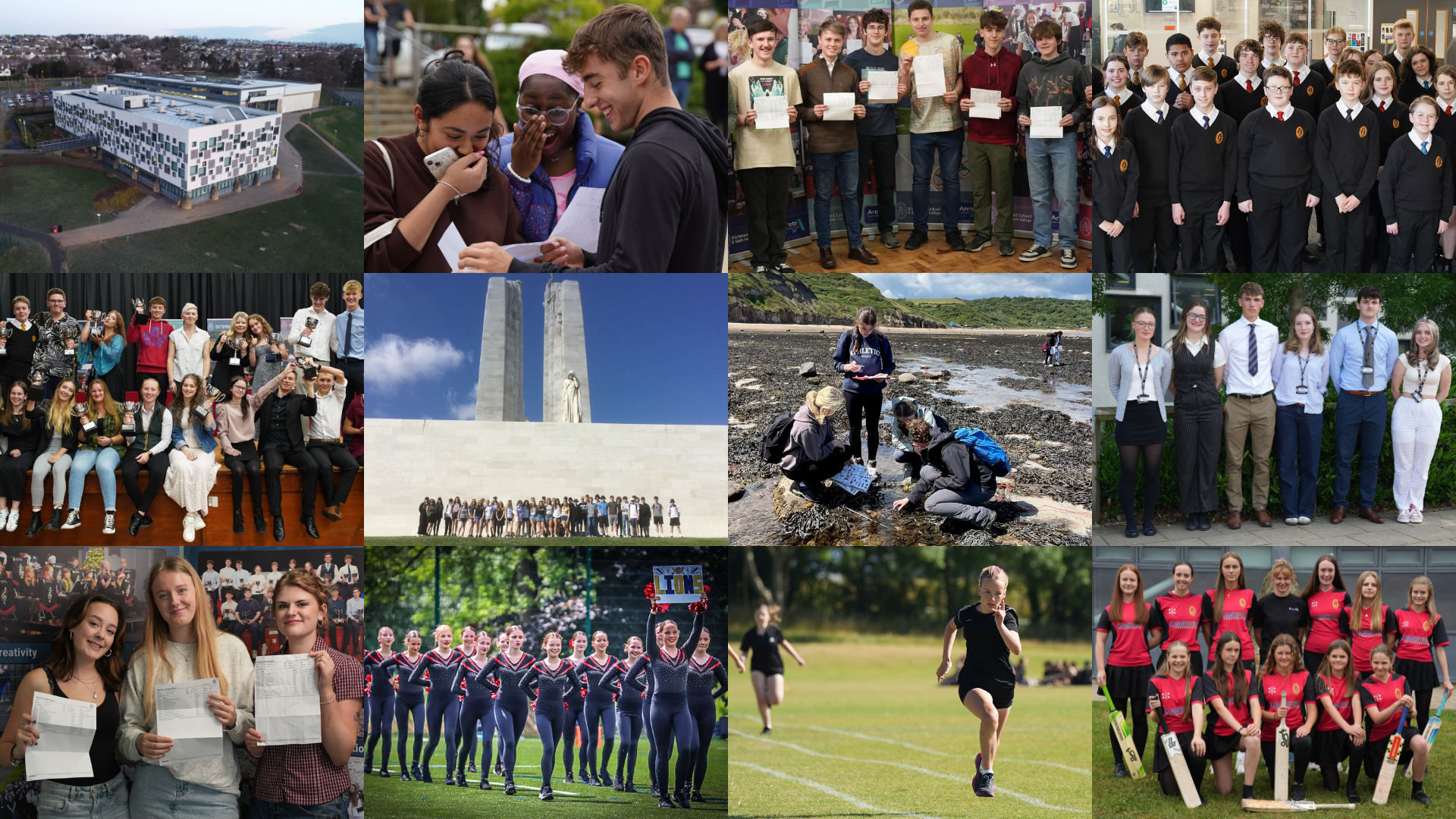
Richmond School and Sixth Form College is a community comprehensive school situated on the edge of the beautiful Yorkshire Dales, based in the market town of Richmond. Despite our size, we are very much a close-knit community. We know each other and take care of each other.

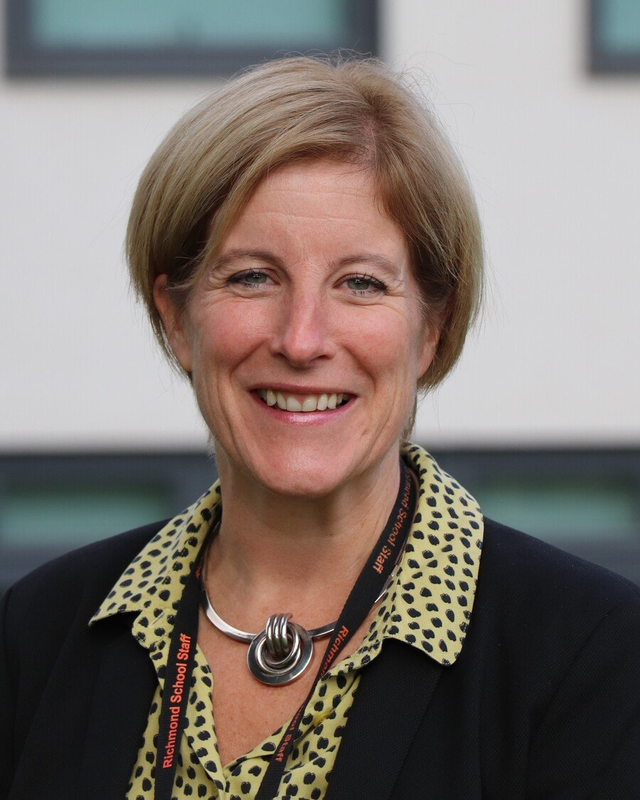
The Richmond School and Sixth Form College  experience is exceptional – one that is academically challenging, full of fantastically diverse learning opportunities and rooted in a belief that high-quality, personalised care and support are fundamental to student success. Our school values of Creativity, Respect, Excellence, Determination, Independence and Teamwork sit at the heart of the school’s ethos ensuring a genuine warm feeling of community and friendship.


 Jenna Potter, Headteacher 

LATEST NEWS

YEAR 9 RUGBY TEAM VICTORIOUS AT ILKLEY SEVENS TOURNAMENT 
27/03/2026 11:01 AM
YEAR 9 RUGBY TEAM VICTORIOUS AT ILKLEY SEVENS TOURNAMENT 
 

Thank you to Mr Moore for the following report: 

The Year 9 rugby team delivered an outstanding performance to be crowned champions at the Ilkley Grammar School Rugby 7s tournament, showcasing determination, teamwork, and resilience throughout the day. 

Facing a strong field of competitive schools, the team progressed confidently through the group stages, demonstrating excellent ball movement, disciplined defence, and a real understanding of space. Each player contributed meaningfully, with impressive support play and communication evident in every match. 

The final proved to be a thrilling and closely contested encounter against a very well-organised St John Fisher side. Both teams displayed high-quality rugby, with strong defensive lines and quick transitions in attack. Our team showed great composure under pressure, maintaining structure and discipline even as the game remained on a knife edge. 

The highlight of the final was surely Charlie Miller finding himself with space on the wing, before making a 50m dash to the corner. A real feather in the cap of anyone in the front row union! 

In the closing stages, with the score finely balanced, the players dug deep and demonstrated tremendous character to edge ahead. A crucial score, followed by determined defensive work, ensured a narrow but well-deserved victory by just three points. 

This result is a testament to the squad’s hard work, commitment in training, and their ability to perform as a cohesive unit. Every player should be extremely proud of their contribution to what was a fantastic team achievement. 

Well done to all involved on an excellent tournament victory!” 

RICHMOND GIRLS WIN 2 FROM 3 IN RUGBY SEVENS COMPETITION 
26/03/2026 2:30 PM
RICHMOND GIRLS WIN 2 FROM 3 IN RUGBY SEVENS COMPETITION 
 

Thank you to Mr Shami for the following report: 

“Richmond School’s Year 9 and Year 10 girls recently faced strong opposition from Wensleydale and Thirsk schools in an exciting set of fast-paced rugby sevens matches. Throughout the games, the girls demonstrated confidence, determination, and excellent teamwork. 

It was particularly impressive to see the players take ownership of their development. They organised their own warm-up and, after each match, took time to reflect on their performance. They then worked together on specific skills they felt needed improvement, such as tackling and hand-offs, showing great maturity and commitment to improving their game. 

The results were as follows: 

  • Year 10: Wensleydale 15 – 30 Richmond 

  • Year 9: Wensleydale 30 – 20 Richmond 

  • Year 9: Wensleydale 50 – 5 Thirsk 

  • Year 9: Richmond 15 – 0 Thirsk 

  • Year 8: Wensleydale 30 – 15 Thirsk (Year 7) 

Overall, it was a fantastic day of sport, with all players showing determination, teamwork, and a positive attitude throughout. Well done to everyone involved! 

LESSONS FROM AUSCHWITZ – A STUDENTS’ INSIGHT FROM INSIDE THE PROJECT 
20/04/2026 11:30 AM
LESSONS FROM AUSCHWITZ – A STUDENTS’ INSIGHT FROM INSIDE THE PROJECT 
 

10min read time – worth it, though, we hope you’ll agree. 

Four Year 12 students from Richmond Sixth Form College recently took part in the Lessons from Auschwitz project. This is a long-standing educational and commemorative project run by the Holocaust Education Trust offering post-16 students from across the UK the opportunity to learn about the Holocaust and consider its relevance for today. Richmond Sixth Form College students have taken part numerous times in past years, usually with just two students. This year, however, we were fortunate enough to secure four places. 

The project is split into four compulsory phases. Firstly, students must complete a series of online self-guided modules. This is followed by an in-person Orientation Seminar in Leeds where the project is introduced. Students also hear from a Holocaust survivor at this seminar. A week afterwards, students pay a visit to the Holocaust museums and memorials at the sites of Auschwitz-Birkenau in Poland. Students then attend an online ‘Next Steps’ seminar, where they reflect on their visit and start to plan how they will disseminate their experiences to their Sixth Form peers and to the wider school. 

Mrs Moore, History teacher at Richmond and coordinating teacher for the project, initiated the selection process earlier on in the year. She asked students to submit an application outlining why they'd like to be part of the project, any family connections, and what they intended to do as their 'Next Steps' once they became Holocaust Ambassadors in school. 

Soon after their visit and ‘Next Steps’ seminar, we sat down with the four students who took part in the project, Myles Fairhurst, Georgina Braidley, Mikolaj Koltek and Cara Chaney, and started by asking them what they had written in their applications: 

MF: I focused on my belief of the importance of learning from the Holocaust and what antisemitism and hatred can lead to if left unchecked. I linked to political events that are happening now and quoted a version of the well know phrase: ‘Those that don’t learn from history are condemned to repeat it.’ I also mentioned that I have family links to number of people who were affected by Jewish persecution and the Holocaust. 

GB: I wrote about the importance of understanding, too; how extremism can go so far as to let something so horrific happen, and to not allow it to happen again. I said that I thought the only way of gaining a deeper understanding of the events and the experiences of those people was to actually go to Auschwitz and be present where it happened. 

MK: I wrote in a similar vein to the others but focused on the increased polarity of modern politics and what hatred can lead to. I also have a personal link being from Poland, where many of the death camps were, including Auschwitz. We also think, though it’s not been confirmed yet, that my great grandma may have been a survivor. 

CC: Again, similar to the others – the importance of understanding and that it’s easier to demonise something that you don’t understand. I mentioned books that I’d read over the years, but that being there would be so much more valuable than just reading about it. I also talked about the ‘Next Steps’ stage of the project – helping people with their understanding. 

RSFC: So, after you were selected by Mrs Moore, the next stage was the in-person Orientation Seminar in Leeds. Who was there – I guess all the students who were going on the trip to Auschwitz? 

MF: Yes, exactly – there were about 150 students... 

GB: ...four coaches full... 

MK: ...a plane-full! 

RSFC: Wow – I hadn’t realised how big the scale of the project was!  

So, you were introduced to the Auschwitz visit, you met the Holocaust Education Trust educators who would supervise the trip, and you also heard from a survivor – Eva Clarke. What were your main takeaways from the Orientation Seminar? 

CC: Getting a survivor’s testimony before we went gave us a deeper understanding of someone who’d been through those experiences. This meant that when we were there, we could think about individual people. A big focus of the seminar was taking us away from the statistics and getting us to think about personal stories – it really helped during the visit. 

MK: As Cara said, the aim of the seminar was to try to humanise the victims with their personal stories. When we went to Auschwitz, you got an idea of the huge scale of what went on, but you could also think about how individuals suffered. 

GBAnother big point they made was that the Jewish community and people shouldn’t just be seen as victims. Eva Clark was born in Auschwitz and both she and her mother lived through it but also continued their lives afterwards. Seeing more recent family photos of her children, for example, was very powerful – people lived through the Holocaust but went on to do great thingsThe Holocaust isn't just a stationery event in the past, it’s ever changing. Many people didn’t have the chance to continue living afterwards, but it’s very important to consider the stories of those who did. 

MF: Eva’s testimony, as well as her mother’s, was very powerfulIt’s sometimes easy when you’re looking at historical photographs, just to see figures, but Eva’s testimony made it easier for us to see the people in these photos. Six million isn’t just a number, it’s six million individual people, personalities, lives. 

RSFC: Thank you – Eva Clark obviously had quite an impact. 

Ok – let's move on to the visit itself – that's a full-on day! A flight from Leeds to Kraków, then four coaches to the sites of Auschwitz – what time was the flight? 

MF: The flight was at six thirty, but we had to be at the airport at half past four. 

RSFC: So that’s at least a 3am get-up in Richmond! And then the plane – full of people going on the trip? 

MF: Yes – not an empty seat. Students had come from schools and colleges in the Yorkshire and Humber regions – that was why the flight was from Leeds. 

RSFC: Ok – a two-and-a-half-hour flight to Kraków, then through customs and onto the coaches. Can you tell us about the structure of the day from then? 

GB: We started by visiting Auschwitz I – the original work camp. We saw the long lines of barracks where people lived. We went into four or five of the buildings to see exhibitions giving information about various aspects of the work camp – the resistance, shoes, confiscated items, pots and pans, the vast number of *things* that people brought with them to the camp – these exhibitions were a really important way of humanising it, especially things like the children’s shoes – that display had a really emotional impact. 

RSFC: And I guess you were on quite a tight schedule – there was a lot to see? 

MK: Yes, extremely! We didn’t have a minute to spare. We ate on the buses between locations. We didn’t rush it, exactly, but the educators were always very aware of time and kept us moving. Auschwitz is impossible to ‘do’ in a day, but they wanted us to see as much as possible. 

RSFC: What was next on the schedule? 

CC: Next we went to Auschwitz II – known as Birkenau. This place was 23 times bigger than Auschwitz I. It’s similar to Auschwitz I, apart from the scale, and there weren’t as many artefacts and exhibitions there, though it was still very poignant, especially the freight wagon that was used to transport people into the camp 

RSFC: Mrs Moore mentioned that two of you had taken part in a ceremony at the end of the day. Before we talk about that, have we missed anything out? 

MF: Right at start of the day, we visited the Jewish cemetery in Oświęcim, just for 10 minutes or so. This cemetery was destroyed by the Germans and the gravestones used for buildings and roads. After the war, survivors replaced the gravestones the best they could and reconstructed the cemetery. We saw the grave of the last Jewish person to live there, too – that was quite moving. 

GB: That visit emphasised the context of the Holocaust – understanding that there was a Jewish community there before the war... 

MK: ...and that people from that community died of natural causes before the Holocaust began. 

RSFC: And the ceremony at the end of your visit – tell us a bit about that. 

MF: It was the last thing that we did before we left Birkenau. We were right at the far end of the camp where the railway tracks finish. Five students had been chosen to give readings, including me. My reading was a poem written by a 13-year-old boy who on the way to Auschwitz, just before he was murdered in the camp. That was very special and a great honour – giving a voice to someone from 80 years ago. A Rabbi – Rabbi Hughes - then spoke and said a prayer that was written after the war about the Holocaust. That was fascinating to experience – he did in a a typical Jewish manner – more sung than spoken. 

RSFC: And the candle lighting – where did that fit in? 

CC: That was at the very end. I was one of about ten people chosen to place a candle on the railway tracks. It served as a representation of hope, I think – light in the darkness. It was a really good end to the day – a positive note to finish with. 

RSFC: And then back on the coaches to the airport and the flight home – how did the timings work on the way back? 

MF: It was a half eight flight from Kraków, so back to Leeds at about ten with the time zone change. Then the drive back up here – I think some of us got back before midnightothers after! 

RSFC: A 21-hour day, door to door - definitely full-on! 

Looking back on the visit, which must have been challenging and difficult in many ways, what is it that has really stayed with you? 


To read more, head over to our Facebook page:

https://www.facebook.com/RichmondSchoolandSixthFormCollege

ALUMNI PROFILE – GEORGIA MOSS 
16/04/2026 1:45 PM
ALUMNI PROFILE – GEORGIA MOSS 
 

In our semi-regular series of alumni profiles, we recently caught up with Georgia Moss who joined Richmond School in the early 2000s. She tells us about her journey through sixth form college, university, the Teach First programmeto her current role as a Strategy Consultant specialising in education and training. She also tells us about her two cats, her love of rugby and her upcoming wedding – read on! 

RS: Describe your time and your memories of school and college.  

GM: When I started Richmond School as a terrified 11-year-old I knew absolutely nobody when I joined Lower School! - couldn't have imagined how much I would come to love it. I can honestly say I made friends for life, and I have some very fond memories of my time at Richmond. A highlight was being Charities Prefect in sixth form a responsibility I took very seriously! I loved Maths, and still do - thank you to Mr Dalgleish for his hours of patience as I nattered away. I was also super sporty back in the day (less so now!) and really enjoyed my time captaining the tag rugby team and running around hockey and football pitches. I think one of the biggest challenges for me was deciding to take both French and German for GCSE and trying to shift between the languages not-so-seamlessly. Similarly, for A-level I took a real range of subjects - Maths, French, Geography and History - which I found a real challenge to jugglethough do not regret! 

RS: What did you do straight after college? 

GM: After college I went to the University of Sheffield to study Maths with French. I soon realised that the French element of it wasn't for me and switched to straight Mathematics at the end of the first year. My friends and family still tease me about my 4-year 3-year maths degree! The hard work paid off though, and I graduated with a 1st in 2015. For me, a real highlight was the History of Mathematics course - yes, I am a nerd! If I could have done a masters in this, I would have. Funnily enough, there isn't much demand.  

RS: What did you do next? 

GM: In my final year, I was feeling a bit lost. Everyone I knew was applying for graduate accounting roles, but I knew this wasn't for me. An email landed in my inbox about a Teach First internship and, late at night after a Tom Jones concert, I found myself submitting an application. Roll on a year and I was starting my intensive training to become a Maths teacher in Birmingham. Whilst I left teaching after two years, I have so much respect for people who choose to do the profession. It was perhaps the most challenging two years of my life, but also the most rewarding time with many fond memories and funny stories to tell. 

RS: What are you doing now? 

GM: After teaching, I moved to London - something I said I would never do! - to become a Strategy Consultant. I specialise in education and training and work with investors, providing commercial advice on potential transactions, and universities and corporates on their strategies for growth. I love that my role has allowed me to stay close to the world of education. I'm now a director on our team, having been here for nine years. 

RS: Do you have any other interests or roles?  

GM: I have two catsCecil and Winstonwho love to make appearances on work calls with clients. They're a big part of my lifeand my personality! My time is currently consumed by wedding planning, which I'm really enjoying and is providing a really good excuse to visit my family in Yorkshire more often. I'm a big fan of rugby, though my playing days are long behind meand I love to read a crime novel. I'm currently working my way through the Jack Reacher series, which I would definitely recommend! 

RS: What are your plans for the future 

GM: I'm currently very busy with moving house and planning the wedding, both of which are taking up a decent amount of my time. As for the future, who knows? 

RS: Looking back, what advice would you have for our current students?  

GM: Work hard but make sure you have fun too. The friendships you make at school will stick with you for life - don't wish the time away. 

MONTH OF THE MILITARY CHILD AT RICHMOND SCHOOL: WINDS OF CHANGE 
16/04/2026 12:25 PM
MONTH OF THE MILITARY CHILD AT RICHMOND SCHOOL: WINDS OF CHANGE 
 

This April, Richmond School is proud to be celebrating the Month of the Military Child, embracing this year’s theme: “Winds of Change.” 

Throughout this week, every year group has listened attentively to an assembly exploring what Winds of Change means for our service children and the vital support they provide to their Armed Forces families. Central to this message is the dandelion – a symbol closely associated with military children. Just like a dandelion seed carried by the wind, service children often move from place to place, showing remarkable resilience, adaptability and strength as they put down roots wherever they land. Four of our service students volunteered to share their lived experiences of military life, offering honesty, insight and inspiration to their peers.  

The celebrations continued with a poetry workshop led by Charlie Dixon, a poetry practitioner from the charity Never Such Innocence. Much to the students delight, Charlie was joined by her mobility dog Pickle. During this session, Year 7 and 8 students produced moving poetry reflecting on Winds of Change, capturing the realities, emotions and resilience that define the lives of military children.  

In the afternoon, Year 9 and 10 students took part in an art workshop led by Mrs Cheesbrough, Angela Campbell (Service Children’s Champion for North Yorkshire) and Stacey Smith (Youth Voice and Engagement Officer for the Council). Staff were deeply inspired by the students’ openness as they shared their experiences of moving house, forming new friendships and navigating both the highs and lows of military life, and created some wonderful pieces of art to represent this. 

We are incredibly proud that all poetry and artwork will be submitted to the charity’s national competition, with any winners being invited to spend a special day at the MOD building in London. Watch this space – we’ll be sharing some of this fantastic work very soon! 

The celebrations don’t stop there. Our restaurant is also joining in throughout the month. From Tuesday to Friday next week, students can enjoy a different themed menu from bases around the world each day, celebrating places our service children may have lived or called home. The full menu will be shared at the end of the week – so keep an eye out! 

With such a large number of our families being part of or connected to the armed forces, Richmond School is proud to be celebrating the resilience, voice and community of our service children. Thank you to Charlie, Angela and Stacey for helping us to share this important message with our students. 

YEAR 10 NETBALL – HAMBLETON AND RICHMONSHIRE TOURNAMENT 
16/04/2026 9:46 AM
YEAR 10 NETBALL – HAMBLETON AND RICHMONSHIRE TOURNAMENT 
 

Thanks to Mrs Carruthers for the following report: 

The Richmond School Year 10 netball team competed at Queen Mary’s School recently, playing against schools from across the Hambleton and Richmondshire area. 

The team demonstrated excellent attitudes throughout the afternoon, showing resilience, teamwork, and commitment in every match. Performance improved with each game, with players growing in confidence and applying feedback effectively as the fixtureprogressed. 

It was encouraging to see such strong teamwork, determination, and sportsmanship on display. The girls represented Richmond School superbly and should be very proud of their efforts and development. 

A great team performance and a positive step forward for the season. 

Stokesley won the tournament with Queen Mary's coming second. 

CELEBRATING SUCCESS: SWIMMING FOR ALL PROGRAMME MAKES A LASTING IMPACT 
15/04/2026 12:30 PM
CELEBRATING SUCCESS: SWIMMING FOR ALL PROGRAMME MAKES A LASTING IMPACT 


Thanks to Steffy Cappleman, key member of the YES@ Areté Learning Trust Inclusion Team, for the following report about the continued success of their Swimming for All programme: 

The Swimming for All programme, a cornerstone of the Activities for All initiative led by YES@ Areté Learning Trust, is celebrating continued success since its launch in 2019. Generously supported by the The National Lottery Community Fund, the programme has opened up vital opportunities for children and young people who might otherwise face barriers to accessing swimming. 

Delivered in partnership with Richmond Dales Swimming Club, the programme offers small-group swimming sessions tailored to meet a wide range of needs, including social and emotional challenges, coordination difficulties, and other barriers to participation. This personalised approach has enabled participants to build confidence, develop essential life skills, and experience the many benefits of being in the water. 

A key strength of the programme is its strong and longstanding relationship with the club and its dedicated coaching team. Their expertise and commitment have been instrumental in creating a supportive and inclusive environment where every swimmer can thrive. 

Importantly, the collaboration also provides a clear and meaningful pathway for progression. Participants are given the opportunity to continue their swimming journey by joining club squads or progressing into the club’s highly regarded Inspire to Swim programme. Following the most recent block of sessions, which concluded just before the end of last term, two swimmers successfully transitioned into the Inspire to Swim programme—an achievement that highlights the programme’s lasting impact. 

Swimming is not only a vital life skill but also a powerful way to support both physical and mental wellbeing. Through Swimming for All, young people are not only learning to swim but are also gaining confidence, resilience, and a sense of achievement. 

This success would not be possible without the dedication of everyone involved. Congratulations to the young swimmers for stepping outside their comfort zones and embracing new challenges, and heartfelt thanks to the coaches and staff whose encouragement and support continue to make such a difference. 

The Swimming for All programme stands as a shining example of how collaboration and community support can create meaningful opportunities and lasting positive outcomes for young people. 

To find out more about the Activities for All programme, email the YES@ Areté Learning Trust Inclusion Team at yes@arete.uk 

THE HEADTEACHER’S CREDIT VALUES AWARD WAS PRESENTED TO IZZY BARNES IN YEAR 11 
14/04/2026 1:00 PM
THE HEADTEACHER’S CREDIT VALUES AWARD WAS PRESENTED TO IZZY BARNES IN YEAR 11 


Izzy was nominated by Mrs Gleave who said: “Izzy has worked incredibly hard over the 2 years of her English GCSE courses. Every piece of Independent Learning has been completed in meticulous detail – often above and beyond the task set. Every task in class is completed thoughtfully and with great attention to following advice, models and success criteria. The thing that has impressed me most about Izzy has been her absolute resolution to keep on improving. Rather than being satisfied with the (very creditable) grades she got at the beginning of the two years, she has constantly sought to improve her work, particularly in timed conditions. As a result, she has developed a lovely critical writing style and an impressive knowledge and set of ideas around our texts. This is underpinned with revision which is well-planned and detailed, so she knows which quotation and language analysis to reach for no matter what the essay title. I wish Izzy all the success she richly deserves in her upcoming GCSEs, and a lovely summer of rest afterwards.” 

YEAR 12 STUDENT GIVES RESEARCH TALK AT LOCAL ARCHAEOLOGY GROUP MEETING. 
13/04/2026 2:00 PM
YEAR 12 STUDENT GIVES RESEARCH TALK AT LOCAL ARCHAEOLOGY GROUP MEETING. 


Myles Fairhurst, Year 12 student at Richmond Sixth Form College, has been a committed and active student of all things historical and archaeological from a very young age. As well as working hard in college to achieve the A level results he needs to study archaeology at university, he is also very much involved in the history and archaeology of his local area and community. He recently gave a talk to his local archaeology group, Altogether Archaeology, about a site that he has been working on for well over a year.  

Thank you to Myles for providing more information:  

Information about the site:

The site I have been researching is a small village in County Durham. The village, amazingly, has a 1900-year history, spanning right back to the early 2nd century during the Roman occupation of Britain. It also has a church which dates back to the Early Medieval (Anglo-Saxon) period, but the current church is the Victorian re-modellinglike many churches across England - very annoying! At the site there has been several finds including from the Roman period, Early Medieval and Medieval periods. Between the Tudor Period and the Victorian period, the village seemed to have declined in population and size. As previously stated, the Victorians re-built the medieval church on top of the original foundations, making it very hard to dig the original church!  

Information on my research: 

I started my research 18 months ago after I found the earthworks of buildings and medieval ploughing, called ridge and furrow. I found this using data from a technique called LiDAR which is where lasers are fired down from a plane or helicopter and the lasers bounce off every lump and bump in the ground, even the ones that aren’t able to be seen by the human eye on the ground and in the air. From this point I spent nearly every weekend doing some form of research on the site, up until my talk.   

Information on Altogether Archaeology: 

Altogether Archaeology is a volunteer archaeology group based in County Durham and Teesdale. The group started in 2015 and has researched and dug at several sites across Teesdale, such as Blanchland, Brignall Old Church, Plover Hall and GueswickTheir website states: The aim of the group is to promote awareness of the archaeological heritage of the North Pennines and the surrounding area by the involvement of its members of all ages in archaeological fieldwork and research.  

Information about the talk: 

The talk was refined from a large research document, as I only had 45 minutes to cover the key information. I talked about examples of medieval villages and their layoutsthen covered the periods of occupation of the village, the archaeology associated with them and finally what can be done to protect the site and how excavations could be carried out. The talk was very well received by those who attended, and they asked some fantastic questionsgiving me many other areas and angles to explore at the site. I can’t thank everybody at Altogether Archaeology enough for this amazing opportunity!”  

Altogether Archaeology’s website can be found at the link below: 

Their Facebook page can be found at this link:  

YEAR 9 AREA 7-A-SIDE CHAMPIONS FOR SECOND YEAR IN A ROW! 
13/04/2026 10:42 AM
YEAR 9 AREA 7-A-SIDE CHAMPIONS FOR SECOND YEAR IN A ROW! 
 

Thank you to Mr Oliver for the following report from the Area 7-a-side tournament just before Easter: 

"The Year 9 boys arrived at the Area 7-a-side tournament in Bedale with ambitions of winning the competition for a second year in a row. This would not be an easy task as the tournament featured many talented teams, and a format where dropped points could quickly become very costly.  

We started our defence of the title in a positive way with a 1-0 victory against Thirsk thanks to Freddie Curtis' first goal of the day after a good ball from Harry Coyle. This was followed up with an impressive 2-0 victory against Bedale with both goals coming from Harry with Seth Bell assisting the first and Connell Lacey the second.  

Early momentum was starting to build, but the next game was a tricky fixture against a determined Northallerton team. Freddie scored to give us an early lead, but Northallerton fought back, managing to equal the scoreline. Our opponents then wrestled complete control of the game and created many chances, but we defended brilliantly to deny them a breakthrough. Northallerton did find a goal, but it was disallowed as the central whistle had already been blown, confirming a point for both teams. 

Next up was a clash against an Easingwold team that had started the tournament in good form. Richmond knew that this game was crucial for our title hopes due to multiple dropped points in a row being costly. We started the game very well with an excellent finish from Kai Morfoot after good play from Connell to set him up. Easingwold found an equaliser after their striker rounded Junior Latcham in the Richmond goal to finish into an open net. Richmond restored their lead through another goal from Freddie with Kai assisting. We then managed the rest of the game brilliantly to confirm a 2-1 victory.  

The final game of the tournament saw us play SFX in another tightly contested game. The first goal came from Olly Middlemiss after combining with Seth. Shortly afterwards, Owain Hyatt doubled our lead after some brilliant play dribbling through the entire SFX team, then volleying the ball with his weak foot into the net. Finally, Archie King got a deserved first goal of the day after he rounded the keeper from another Seth assist, his second of the game. This result sealed our tournament victory and gave us the retention of the Area 7-a-side cup we set out for at the start of the day. Brilliant work from everyone involved - well done!  

Player of the tournament - Seth Bell (pictured) 

Back row: Harry Coyle, Archie King, Connell Lacey, Seth Bell, Owain Hyatt, Oliver Pickles, Freddie Curtis, Olly Middlemiss, Kai Morfoot 

Front row: Junior Latcham 

YEAR 9 RUGBY TEAM VICTORIOUS AT ILKLEY SEVENS TOURNAMENT 
27/03/2026 11:01 AM
YEAR 9 RUGBY TEAM VICTORIOUS AT ILKLEY SEVENS TOURNAMENT 
 

Thank you to Mr Moore for the following report: 

The Year 9 rugby team delivered an outstanding performance to be crowned champions at the Ilkley Grammar School Rugby 7s tournament, showcasing determination, teamwork, and resilience throughout the day. 

Facing a strong field of competitive schools, the team progressed confidently through the group stages, demonstrating excellent ball movement, disciplined defence, and a real understanding of space. Each player contributed meaningfully, with impressive support play and communication evident in every match. 

The final proved to be a thrilling and closely contested encounter against a very well-organised St John Fisher side. Both teams displayed high-quality rugby, with strong defensive lines and quick transitions in attack. Our team showed great composure under pressure, maintaining structure and discipline even as the game remained on a knife edge. 

The highlight of the final was surely Charlie Miller finding himself with space on the wing, before making a 50m dash to the corner. A real feather in the cap of anyone in the front row union! 

In the closing stages, with the score finely balanced, the players dug deep and demonstrated tremendous character to edge ahead. A crucial score, followed by determined defensive work, ensured a narrow but well-deserved victory by just three points. 

This result is a testament to the squad’s hard work, commitment in training, and their ability to perform as a cohesive unit. Every player should be extremely proud of their contribution to what was a fantastic team achievement. 

Well done to all involved on an excellent tournament victory!” 

RICHMOND GIRLS WIN 2 FROM 3 IN RUGBY SEVENS COMPETITION 
26/03/2026 2:30 PM
RICHMOND GIRLS WIN 2 FROM 3 IN RUGBY SEVENS COMPETITION 
 

Thank you to Mr Shami for the following report: 

“Richmond School’s Year 9 and Year 10 girls recently faced strong opposition from Wensleydale and Thirsk schools in an exciting set of fast-paced rugby sevens matches. Throughout the games, the girls demonstrated confidence, determination, and excellent teamwork. 

It was particularly impressive to see the players take ownership of their development. They organised their own warm-up and, after each match, took time to reflect on their performance. They then worked together on specific skills they felt needed improvement, such as tackling and hand-offs, showing great maturity and commitment to improving their game. 

The results were as follows: 

  • Year 10: Wensleydale 15 – 30 Richmond 

  • Year 9: Wensleydale 30 – 20 Richmond 

  • Year 9: Wensleydale 50 – 5 Thirsk 

  • Year 9: Richmond 15 – 0 Thirsk 

  • Year 8: Wensleydale 30 – 15 Thirsk (Year 7) 

Overall, it was a fantastic day of sport, with all players showing determination, teamwork, and a positive attitude throughout. Well done to everyone involved! 

LESSONS FROM AUSCHWITZ – A STUDENTS’ INSIGHT FROM INSIDE THE PROJECT 
20/04/2026 11:30 AM
LESSONS FROM AUSCHWITZ – A STUDENTS’ INSIGHT FROM INSIDE THE PROJECT 
 

10min read time – worth it, though, we hope you’ll agree. 

Four Year 12 students from Richmond Sixth Form College recently took part in the Lessons from Auschwitz project. This is a long-standing educational and commemorative project run by the Holocaust Education Trust offering post-16 students from across the UK the opportunity to learn about the Holocaust and consider its relevance for today. Richmond Sixth Form College students have taken part numerous times in past years, usually with just two students. This year, however, we were fortunate enough to secure four places. 

The project is split into four compulsory phases. Firstly, students must complete a series of online self-guided modules. This is followed by an in-person Orientation Seminar in Leeds where the project is introduced. Students also hear from a Holocaust survivor at this seminar. A week afterwards, students pay a visit to the Holocaust museums and memorials at the sites of Auschwitz-Birkenau in Poland. Students then attend an online ‘Next Steps’ seminar, where they reflect on their visit and start to plan how they will disseminate their experiences to their Sixth Form peers and to the wider school. 

Mrs Moore, History teacher at Richmond and coordinating teacher for the project, initiated the selection process earlier on in the year. She asked students to submit an application outlining why they'd like to be part of the project, any family connections, and what they intended to do as their 'Next Steps' once they became Holocaust Ambassadors in school. 

Soon after their visit and ‘Next Steps’ seminar, we sat down with the four students who took part in the project, Myles Fairhurst, Georgina Braidley, Mikolaj Koltek and Cara Chaney, and started by asking them what they had written in their applications: 

MF: I focused on my belief of the importance of learning from the Holocaust and what antisemitism and hatred can lead to if left unchecked. I linked to political events that are happening now and quoted a version of the well know phrase: ‘Those that don’t learn from history are condemned to repeat it.’ I also mentioned that I have family links to number of people who were affected by Jewish persecution and the Holocaust. 

GB: I wrote about the importance of understanding, too; how extremism can go so far as to let something so horrific happen, and to not allow it to happen again. I said that I thought the only way of gaining a deeper understanding of the events and the experiences of those people was to actually go to Auschwitz and be present where it happened. 

MK: I wrote in a similar vein to the others but focused on the increased polarity of modern politics and what hatred can lead to. I also have a personal link being from Poland, where many of the death camps were, including Auschwitz. We also think, though it’s not been confirmed yet, that my great grandma may have been a survivor. 

CC: Again, similar to the others – the importance of understanding and that it’s easier to demonise something that you don’t understand. I mentioned books that I’d read over the years, but that being there would be so much more valuable than just reading about it. I also talked about the ‘Next Steps’ stage of the project – helping people with their understanding. 

RSFC: So, after you were selected by Mrs Moore, the next stage was the in-person Orientation Seminar in Leeds. Who was there – I guess all the students who were going on the trip to Auschwitz? 

MF: Yes, exactly – there were about 150 students... 

GB: ...four coaches full... 

MK: ...a plane-full! 

RSFC: Wow – I hadn’t realised how big the scale of the project was!  

So, you were introduced to the Auschwitz visit, you met the Holocaust Education Trust educators who would supervise the trip, and you also heard from a survivor – Eva Clarke. What were your main takeaways from the Orientation Seminar? 

CC: Getting a survivor’s testimony before we went gave us a deeper understanding of someone who’d been through those experiences. This meant that when we were there, we could think about individual people. A big focus of the seminar was taking us away from the statistics and getting us to think about personal stories – it really helped during the visit. 

MK: As Cara said, the aim of the seminar was to try to humanise the victims with their personal stories. When we went to Auschwitz, you got an idea of the huge scale of what went on, but you could also think about how individuals suffered. 

GBAnother big point they made was that the Jewish community and people shouldn’t just be seen as victims. Eva Clark was born in Auschwitz and both she and her mother lived through it but also continued their lives afterwards. Seeing more recent family photos of her children, for example, was very powerful – people lived through the Holocaust but went on to do great thingsThe Holocaust isn't just a stationery event in the past, it’s ever changing. Many people didn’t have the chance to continue living afterwards, but it’s very important to consider the stories of those who did. 

MF: Eva’s testimony, as well as her mother’s, was very powerfulIt’s sometimes easy when you’re looking at historical photographs, just to see figures, but Eva’s testimony made it easier for us to see the people in these photos. Six million isn’t just a number, it’s six million individual people, personalities, lives. 

RSFC: Thank you – Eva Clark obviously had quite an impact. 

Ok – let's move on to the visit itself – that's a full-on day! A flight from Leeds to Kraków, then four coaches to the sites of Auschwitz – what time was the flight? 

MF: The flight was at six thirty, but we had to be at the airport at half past four. 

RSFC: So that’s at least a 3am get-up in Richmond! And then the plane – full of people going on the trip? 

MF: Yes – not an empty seat. Students had come from schools and colleges in the Yorkshire and Humber regions – that was why the flight was from Leeds. 

RSFC: Ok – a two-and-a-half-hour flight to Kraków, then through customs and onto the coaches. Can you tell us about the structure of the day from then? 

GB: We started by visiting Auschwitz I – the original work camp. We saw the long lines of barracks where people lived. We went into four or five of the buildings to see exhibitions giving information about various aspects of the work camp – the resistance, shoes, confiscated items, pots and pans, the vast number of *things* that people brought with them to the camp – these exhibitions were a really important way of humanising it, especially things like the children’s shoes – that display had a really emotional impact. 

RSFC: And I guess you were on quite a tight schedule – there was a lot to see? 

MK: Yes, extremely! We didn’t have a minute to spare. We ate on the buses between locations. We didn’t rush it, exactly, but the educators were always very aware of time and kept us moving. Auschwitz is impossible to ‘do’ in a day, but they wanted us to see as much as possible. 

RSFC: What was next on the schedule? 

CC: Next we went to Auschwitz II – known as Birkenau. This place was 23 times bigger than Auschwitz I. It’s similar to Auschwitz I, apart from the scale, and there weren’t as many artefacts and exhibitions there, though it was still very poignant, especially the freight wagon that was used to transport people into the camp 

RSFC: Mrs Moore mentioned that two of you had taken part in a ceremony at the end of the day. Before we talk about that, have we missed anything out? 

MF: Right at start of the day, we visited the Jewish cemetery in Oświęcim, just for 10 minutes or so. This cemetery was destroyed by the Germans and the gravestones used for buildings and roads. After the war, survivors replaced the gravestones the best they could and reconstructed the cemetery. We saw the grave of the last Jewish person to live there, too – that was quite moving. 

GB: That visit emphasised the context of the Holocaust – understanding that there was a Jewish community there before the war... 

MK: ...and that people from that community died of natural causes before the Holocaust began. 

RSFC: And the ceremony at the end of your visit – tell us a bit about that. 

MF: It was the last thing that we did before we left Birkenau. We were right at the far end of the camp where the railway tracks finish. Five students had been chosen to give readings, including me. My reading was a poem written by a 13-year-old boy who on the way to Auschwitz, just before he was murdered in the camp. That was very special and a great honour – giving a voice to someone from 80 years ago. A Rabbi – Rabbi Hughes - then spoke and said a prayer that was written after the war about the Holocaust. That was fascinating to experience – he did in a a typical Jewish manner – more sung than spoken. 

RSFC: And the candle lighting – where did that fit in? 

CC: That was at the very end. I was one of about ten people chosen to place a candle on the railway tracks. It served as a representation of hope, I think – light in the darkness. It was a really good end to the day – a positive note to finish with. 

RSFC: And then back on the coaches to the airport and the flight home – how did the timings work on the way back? 

MF: It was a half eight flight from Kraków, so back to Leeds at about ten with the time zone change. Then the drive back up here – I think some of us got back before midnightothers after! 

RSFC: A 21-hour day, door to door - definitely full-on! 

Looking back on the visit, which must have been challenging and difficult in many ways, what is it that has really stayed with you? 


To read more, head over to our Facebook page:

https://www.facebook.com/RichmondSchoolandSixthFormCollege

ALUMNI PROFILE – GEORGIA MOSS 
16/04/2026 1:45 PM
ALUMNI PROFILE – GEORGIA MOSS 
 

In our semi-regular series of alumni profiles, we recently caught up with Georgia Moss who joined Richmond School in the early 2000s. She tells us about her journey through sixth form college, university, the Teach First programmeto her current role as a Strategy Consultant specialising in education and training. She also tells us about her two cats, her love of rugby and her upcoming wedding – read on! 

RS: Describe your time and your memories of school and college.  

GM: When I started Richmond School as a terrified 11-year-old I knew absolutely nobody when I joined Lower School! - couldn't have imagined how much I would come to love it. I can honestly say I made friends for life, and I have some very fond memories of my time at Richmond. A highlight was being Charities Prefect in sixth form a responsibility I took very seriously! I loved Maths, and still do - thank you to Mr Dalgleish for his hours of patience as I nattered away. I was also super sporty back in the day (less so now!) and really enjoyed my time captaining the tag rugby team and running around hockey and football pitches. I think one of the biggest challenges for me was deciding to take both French and German for GCSE and trying to shift between the languages not-so-seamlessly. Similarly, for A-level I took a real range of subjects - Maths, French, Geography and History - which I found a real challenge to jugglethough do not regret! 

RS: What did you do straight after college? 

GM: After college I went to the University of Sheffield to study Maths with French. I soon realised that the French element of it wasn't for me and switched to straight Mathematics at the end of the first year. My friends and family still tease me about my 4-year 3-year maths degree! The hard work paid off though, and I graduated with a 1st in 2015. For me, a real highlight was the History of Mathematics course - yes, I am a nerd! If I could have done a masters in this, I would have. Funnily enough, there isn't much demand.  

RS: What did you do next? 

GM: In my final year, I was feeling a bit lost. Everyone I knew was applying for graduate accounting roles, but I knew this wasn't for me. An email landed in my inbox about a Teach First internship and, late at night after a Tom Jones concert, I found myself submitting an application. Roll on a year and I was starting my intensive training to become a Maths teacher in Birmingham. Whilst I left teaching after two years, I have so much respect for people who choose to do the profession. It was perhaps the most challenging two years of my life, but also the most rewarding time with many fond memories and funny stories to tell. 

RS: What are you doing now? 

GM: After teaching, I moved to London - something I said I would never do! - to become a Strategy Consultant. I specialise in education and training and work with investors, providing commercial advice on potential transactions, and universities and corporates on their strategies for growth. I love that my role has allowed me to stay close to the world of education. I'm now a director on our team, having been here for nine years. 

RS: Do you have any other interests or roles?  

GM: I have two catsCecil and Winstonwho love to make appearances on work calls with clients. They're a big part of my lifeand my personality! My time is currently consumed by wedding planning, which I'm really enjoying and is providing a really good excuse to visit my family in Yorkshire more often. I'm a big fan of rugby, though my playing days are long behind meand I love to read a crime novel. I'm currently working my way through the Jack Reacher series, which I would definitely recommend! 

RS: What are your plans for the future 

GM: I'm currently very busy with moving house and planning the wedding, both of which are taking up a decent amount of my time. As for the future, who knows? 

RS: Looking back, what advice would you have for our current students?  

GM: Work hard but make sure you have fun too. The friendships you make at school will stick with you for life - don't wish the time away. 

FACEBOOK